
Leaderboard



Popular Content
Showing content with the highest reputation on 05/23/2018 in all areas
-
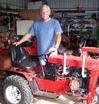
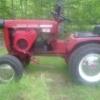
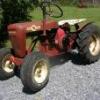
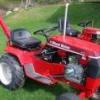
19 pointsFinally got to go back to Maryland and pick up my grandfathers C-175 wheel horse. He left it and few other tractors after he passed away 2 years ago. Its a 1983 he bought it new in 1984 remember the day it was dropped off. Was one of the first tractors I mowed with. My grandfather made wood blocks so I could hit the clutch pedal. I was 6 years old when he got it no way I could let anyone else have it. Mira been taken care off well but I want to freshen it up some. He replaced the deck a few years ago. I want to replace the drive belts and deck belts along with blades. And tune it up some and replace all fluids.
-
9 pointsHello All, So a little story / thoughts on this big Wheel Horse circle of life. Several years ago Steve @stevebo sells his K series single equipped 416 to a seldom seen member here on Redsquare (I forget his screen name--his real name is Lou). Things go along and something goes wrong with the 416... it gets left outside, then it ends up at my place in a tarp shed, then the mice get into it, then I move the tarp shed but not the tractor and it spends yet more time outside. Steve contacts me about my 416 trade deal I'm trying to make but we never get together on that particular tractor...I end up trading that 416 for a GT1600 and a GT2500---both needing work but being a Briggs guy I couldn't help myself. A couple weeks pass and I say "Hey I have this 416 that is full of mice.. I think it was yours" and I send pics---he confirms and says "I have a pic of my son at 2 or 3 sitting on that. So we put a deal together and I end up with his 857 and he ends up with this 416 and another one of my 416s this time with a Magnum. While at his house we discuss his custom puller / rat rod with the Wisconsin yank start... and long story short I go home with that.... The funny part is I look at it close and realize that I had given Matt @grnlark the bare sand blasted and primered 70? frame and dash tower / rear fenders with no wheels or trans or motor or hood... Steve says---yah I got it off him and built this rat / puller out of it and a Wisconsin I picked up at Zagray farms... Its just funny how these tractors seem to make small orbits right back to where they came from... See you all at the show!!! Tony
-
8 pointsAs we're just counting days now, it's starting to get intense in here! The horde from the Midwest invading us easterners!
-
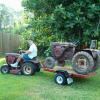
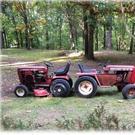
6 pointshere is a bunch of my horse's at a local show.i take anywhere from 12 to 20+ horse's to the local shows
-
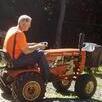
5 pointsIt is very funny, I don't usually have sellers remorse when I sell a tractor or other but when I sold that one I did. Good to have it back even though it needs a lot. My son who is now 11 told me he feels he is ready to restore a tractor on his own. So .... I figured what could be a better one to restore then this one? Here his is at about age 2?
-
5 pointsAfter we concluded the ignition system was to blame for the problems, I looked around to find a solution. I found a website where I can buy new parts, but I couldn't wait for shipping. My father insisted there was a conversion kit to get rid of the points, but I couldn't find anything. Lastly, I went to my spare Kohler engine. My brother also has a 1960 wheel horse like mine, but his had a seized engine so he swapped it out, but he left the engine on a shelf. I went to that engine, pulled the points, the magneto coil, and the condenser off of it. I figured they were messed up too, but it was worth a try. Amazingly, after a quick shot of starter fluid, it cranked right up! It smoked a little bit, but it was fine. Then a leak appeared in the float bowl so I shut it down before something caught on fire. Can't wait to get the gas leak fixed and get it back to it's former glory!
-
5 pointsWell a little more done. Finally moved her inside so I could work out of the rain. Got my new tail lights mounted, ignition switch in and wiring figured out. All temporarily wired up to get it working correctly. When it is right I will make a complete wiring harness. Fuel tank in, solenoid in. Next up is to run the fuel line, filter, and get the right length belt...... baby steps before leaps and bounds 👍
-
4 pointsSometimes you just need the original part~! My neighbor has a B 100 automatic (1975 0r 1976) that I sold him five or six years ago. Good running and mowing tractor which is his primary usage for it. He had a leaking right rear axle from the oil seal and needed a replacement. NOTE: The boo boos on the red coated seal are only from my oil seal removal tool after taking it out! He went to another friend in town that works on these (use to be a Wheel Horse service person) and had the seal changed with the replacement number seal CR 9878 as Toro no longer carries the #100607 original oil seal used on this tractor model (and from what I researched only five Wheel Horse models used this seal). The new seal did not correct the leak that had started on the right side of the transmssion. So to keep mowing for a week my neighbor created a "collection bucket" to hand under the axle and collect the regular dripping transmission fluid. He told me about it and I did some research on the parts lists for the B-80 and B-100 and found out to my surprise the B 100 automatic had its own unique oil seal parts number (#100607). So I tried to find one otr two. I was able to locate two online sold on Ebay. Still in original package and shipped for a total cost of $15. I ordered it and told my neighbor Tom that we were going to change the seal to one of these new ones as there had to be some difference. I did not know for sure but after removing the newly installed CR 9878 seal i placed the original type #100607 next to the CR 9878. You can see at lease two major differences. The #100607 had a thicker wall and it has the rubber type seal materail at teh outer wall of the metal band around the seal. The original 100607 actaully has two lips on the inside. The CR 9878 is not as deep on the side walls and does not have the second rubber lip. Before removing the CR 8778 it was still leaking fluid from the axle housing. After installation the leak stopped and was dry around the oil seal.
-
4 pointsUs Floridians don’t stand a chance . Wait, am I the only one?
-
3 pointsOk it’s that time of the year again so I decided it was time to break out the wheel horse planter for the first time ever - for the first time it didn’t do to bad - it slipped a few times so I might have to make a few small adjustments or put a small weight on it next time.
-
3 pointsI’m assuming you took the roll pin out that holds the wheel on. You may need to use bearing separators to grab the metal part of the wheel and a big honkin puller connected to the separators
-
3 pointsIt's could be the one for sale not that far from you. (and it looks like it might be missing those brackets )
-
3 pointsSorry won't be making the show. And yes i'm still laughing too
-
3 pointsThis only works when: A. You have a gas can B. You have a trailer C. You can wrangle someone to haul you D. You actually have gas in the can Don't ask!
-
3 pointsKnock it off Tom my belly is still hurting as it is! BTW since you are appling for Terry's card can we assume you will be in attendance? I mean since you turned down an invite to the royal wedding the BS might be more important?!?!?
-
3 pointsI try to change up a little of what i bring so that its not all of the same stuff every time... although some stuff makes it two or three years before i switch it up. Part of what I enjoy about taking stuff to shows is to have some variety. The few shows I hit have some good guys that kind of do the same... so the displays are always a little different.
-
3 pointsDidn't have the real Wheel Horse deal substituted a Harbor Freight Gen Set Head 20AMP 5KW and adapted it to my GT14.... saved my kester with the Mini burst tornadoes we had in Brewster, NY this past Tuesday we were powerless for three days...
-
3 pointsSerial#48337 last one made. Mods please add to my other pics. Thanks No need to edit Tom...fine the way it is. Stevasaurus Edit
-
3 pointsOnly pic I have of Shynon ....
-
2 pointsAs Mike said, presuming the roll pin is removed you may have better luck making the steering wheel move down the shaft first. Support the fan gear support that the shaft goes to with a jack stand which will need to be supporting the weight of the tractor. Use a short pipe or other item that will fit over the 3/4" shaft and drive the steering wheel down a bit. Once it is moving a little it will be easier to pull.
-
2 pointsSee, he wasn't a hoarder, he was saving that engine to become an organ donor for your engine. The fuel leak is probably an indication of a bad needle and seat which will be included in a carburetor kit.
-
2 points@Lane Ranger that 100607 crosses to a Napa 15142 1.5" ID X 2.5" OD
-
2 pointsNot 100% sure of the bond they used for that steering gear at the bottom of the shaft. If it has a roll pin, knock it out and remove the gear. Most likely that steering gear is welded to the shaft, so carefully grind off the weld beads and remove that gear. Do your thing and weld the gear back on or drill a hole and use a roll pin just in case you want to do it again Without a shop press, some can be very difficult to remove from the shaft
-
2 pointsGetting closer I can wait about 10 more days to get your pictures and info
-
2 pointsNot a problem Russ, we'll take care of it. Even if your tractor can't get loaded, come anyway-- we'll find you a ride to borrow since there will be a few other guys there too or I'll even buy one there if needed. ( just don't expect to be riding a NOS 420 LSE )
-
2 pointsI'm so sorry for your loss. Your grandfather had great taste in tractors... as well as preventative maintenance schedules! gorgeous machine!
-
2 points@RandyLittrell Not to hijack Aldon’s thread but The biggest problem I see with the stock axles is the Fender mounting panels. If you could trim an inch off each side up top where they mount to the frame rails and move them both in an inch, that would move your axle mounting flange also in putting them an extra inch away from the tires. Even if you had to run an 1-1/2 to 2” spacer, you might get away from having to swap axles. It would make your seat mounting area narrower and the seat pan might hit the fenders depending on your seat. Put a spacer below the seat bracket maybe. Just thinking out loud. I don’t know as I have only swapped on the eaton. Maybe one day I’ll do an 8 speed.
-
2 points
-
2 pointsHere's one of my paste wax specials.
-
2 pointsThe engine in this model sits in a cradle that is rubber mounted to the frame. That setup requires a short ground cable between the cradle and the frame and due to movement between the two the cable can break from fatigue. Since the starter is the largest single load the battery will see you may be able to move the battery ground cable from the chassis to a bolt on the engine. Then the short ground cable to the frame only has to carry current for the lights and other accessories. The short cable item #47 is illustrated in the single-cylinder electrical page of the parts list Garry
-
2 pointsHaha. It’s a fun little truck. It’s sat out it’s whole life but it’s 100% rust free other than the surface. And older gentleman bought it new in 1983 in Arkansas and he couldn’t drive it much as he got older but it sat under a tree with no protection it’s whole life. It only has 100k miles on it. It’s a V6 with a 4 speed and factory AC. Here are a couple pics when I first got it a few years ago.
-
2 pointsNice Jason .....a trip down memory lane! Another thought Randy it's a good idea to have a tub handy when you run out of gas and a bro has to play filling station! This kinda monkey business is what I like the most about shows! How bout taking a bro to go get his truck!
-
2 pointsNow That's funny, I don't care who you are that's hilarious. I need one of those.
-
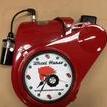
2 points5000 Watt Wheel Horse generator
-
2 pointsOooooooooo...... How about a link (or pm me) to purchase?
-
2 pointsboy I wish I had the time to show with life and kids me busy. I have a fleet of restored garden tractors. when we have picnics and parties I pull them out.
-
2 pointsNew taillights on Skittles. These babies are bright. Even in dim mode. I’ll be the most hated person in the friday night cruise. 😎
-
2 pointsFinally got the cultivator set finished and installed on the 701. Started her for the first in over a month since I began her makeover.. She started right up and purred like a kitten. Only thing i don't like about the jeep cables is that the throttle creeps in where it doesn't lock. Quick fix- piece of rubber hose split to have to keep it throttled up. Just pull out the throttle and clip it over the cable between the knob and dash.
-
2 pointsAlmost forgot to thank our host. Property, buildings and displays he has are awesome and you cannot have a better setting for an event like this. Weather was a bit cool and damp in the AM but turned beautiful in the PM.
-
2 pointsI think a high-banked oval in a steady left turn just kinda creep down ½ a lane at a time. Made for retired Nascar drivers.
-
1 pointWhile I appreciate the gesture, I dont think dad was on here enough for most on here now to have remembered him. I would hate for terry to make 50 cards and most of them end up still in my possesion. Don’t get me wrong, loved my dad and anything to remember him by is cool but I wouldn’t want terry to go through any extra trouble. I’m tickled pink with the banner I got from him. Thanks John for thinking of him/me.. means more than you know. Whatever terry decides is cool with me. 👍
-
1 pointYou are going to need a PTO to drive the mower, the Commando now is set up for a old gear drive RD deck.
-
1 pointYou don't want to pull the hub off the axle. You want to push the axle out of the hub. And a worn keyway will give you very quick clutch engagement. Garry
-
1 pointLook at my post #22 in this thread for bearing and seal vendors. @Lane Ranger may have a side plate that he would either sell and/or trade you. Don't throw out the plate...it is fixable also. Wire wheels or light sand blasting work great on the gears. Emory cloth that brake shaft and then tap off the bearing. I'm glad you decided to take this apart.
-
1 pointI WILL BE THERE ON SATURDAY WITH MY DIESEL 1054. MAY NEED A LITTLE HELP TO UNLOAD TRACTOR. RUSS
-
1 pointThat I don’t know. I have a 418 I bought for parts and finally got it running (like it said it did in the ad) but it hammered badly. I shut it right off and pulled the engine. Put in the shed and saved it for parts. Hope you have better luck with yours. 👍
-
1 pointHad to show my recent add to the collection thanks to @Racinbob, and @stevasaurus, its now in Minnesota. Thanks guys 97-50GNO1
-
1 pointA few years back near Boonville MO.
-
1 pointSome of the best information on Kohler Twins can be found on Brian Miller's website. http://gardentractorpullingtips.com/a1miller.htm These are the things that can be done to virtually any flathead twin cylinder engine to gain more power and torque: spec over 24300 Series 2 Full pressure oiling system. 1. Check that the cylinder walls are in good condition and not severely scored or worn. If they're in good condition, deglaze them, and if the pistons are reusable, install new piston rings. 2. If it's a Kohler engine model KT17 Series II, KT19 Series II, M18 or M20, leave out the cylinder-to-crankcase gaskets and apply Clear RTV Silicone Adhesive Sealant instead. Doing this should allow the pistons to come approximately .030" closer to the top of the cylinders, increasing the compression ratio slightly. By the way - I've always preferred to use Clear RTV Silicone Adhesive Sealant for three reasons: Due to metal warpage (which is unavoidable in most cases), gaskets don't always seal the irregularities and imperfections between mating surfaces, especially thin metal covers; being it's an adhesive, it bonds parts together, forming a leak-proof seal; and being it's clear, a thin bead of silicone makes for a clean and professional-looking repair job. It can't be easily seen or noticed between the parts. 3. Perform a professional valve job. If it isn't already, regrind the intake valve faces and seats at a 30°/31° angles, respectively, and regrind the exhaust valve faces and seats a 45°/46° angles, respectively. 4. Set the valve clearances at .006" for the intake valves and .010" for the exhaust valves. 5. Resurface the cylinder heads on a wide flat sanding belt or large diameter disc sander to remove warpage and restore flatness, and to ensure proper head gasket sealing. 6. In each cylinder head, relocate tip of spark plug closer to exhaust valve. To do this, weld up the spark plug hole, bore an angled hole toward the exhaust valve, then cut threads and mill seat area able for installation of the spark plug. 7. Use full synthetic 10W40 motor oil. Full synthetic oil don't get hot like conventional (petroleum-based) oils do. It's more slippery and remains cooler even after the engine has been in operation for several hours to better protect internal parts for longer engine life. And I don't think it matters which brand of synthetic oil to use, because they all pretty much do the same thing. Information About the Kohler Engine Models KT17, KT19, KT21, and KT17 Series II and KT19 Series II Oiling Systems - Kohler engine models KT17, KT17 Series II, KT19, KT19 Series II, and KT21 (snowmobile engine) all have a gear-driven gerotor oil pump, and use one of two types of pressurized lubrication systems. The first design KT17, KT19 and KT21 engines use a pressurized SPRAY lubrication system. The oil pump delivers oil to the main bearings and camshaft bearings at approximately 5 PSI. Lubrication for the connecting rod journals is provided by oil sprayed from two small holes drilled in the camshaft in alignment with the connecting rods. The main bearings are under pressurized oil, but the connecting rod journals receive oil that's constantly sprayed through drilled holes in an oil passageway in the camshaft. If the wrong velocity of oil is used, or if the main bearings are worn, this will lower the oil pressure in the camshaft, and the pressurized spray lubrication system could cause insufficient oiling to the rod journals, especially the #1 rod (one closest to the flywheel), which will eventually lead to connecting rod failure. What causes the rod failure is if the motor oil isn't changed on a regular basis (once a year or every 25 hours of run time) and/or using non-detergent motor oil, being there's no oil filter for these engines, normal metallic wear fragments in the oil grind away at the main bearings and crankshaft main journals, especially the rear main bearing and journal. This increases the oil clearance between the bearing and journal (oil clearance should be .0013"-.0033"), resulting in excessive oil drainback into the crankcase and providing insufficient oil flow and pressure through the camshaft (again, there is only 5 PSI oil pressure in these engines), which allows less oil sprayed on the connecting rods. This is why the design was changed to a full pressure lubrication system as explained below Ê. When rebuilding either engine, the main bearings should replaced with new ones and the crankshaft main journals (and perhaps rod journals, too) should be reground if worn beyond OEM Kohler specifications. If the crankshaft main journals are worn beyond specifications, the main journals can be reground to .010" or .020" undersize, and matching undersize main bearings will need to be installed. The rod journals can only be reground to .010" undersize, and .010" undersize rods will need to be used. In most cases, it's cost-prohibitive to have a worn or heavily scored crank journal welded up and reground back to STD size. Also, on these engines, one main journal can be reground undersize if it's worn beyond specifications (mostly likely the PTO end), and the other (most likely the flywheel end) can remain STD size if it's within specifications. But if the engine has an oil filter and if the oil is changed regularly, it's less likely that the crankshaft main journals and main bearings will not wear beyond specifications. The reason Kohler didn't provide provisions for an oil filter on the first design KT17 and KT19 engines is because again, being these engines only produce 5 PSI oil pressure, there wouldn't be enough oil pressure to pump through the filter and then to the main bearings and spray on the rods. Also, being there's no provision (port) on the engine block for an oil filter to filter out contaminants from the crankcase oil, it'll be a good idea to glue a small rare earth/neodymium magnet to the inside bottom of the engine block to attract steel or cast iron metal wear fragments for continued full oil pressure and longer engine life. Sometimes some of the wear fragments do not drain out with the oil when performing an oil change, even when the oil is hot. The crankcase oil should be changed once a year or every 25 hours of run time. Be sure to use high quality 10W30 or 10W40 motor oil, too. The first design KT17 and KT19 are a very good engines and should last a long time, only if high quality motor oil is used, and the crankcase oil is changed on a regular basis and/or using non-detergent motor oil! Fresh high detergent motor oil containing a high zinc content anti-wear additive, such as ZDDP(Zinc dithiophosphate) is cheaper than a new engine or an engine rebuild. The redesigned KT17 Series II and KT19 Series II (including all Magnum twin cylinder engines) have a full pressure lubrication system, much like in a modern-day automobile engine. The Full Pressure Lubrication System delivers oil to the crankshaft bearings, camshaft journals, and connecting rod journals at approximately 25-50 PSI. A spring-loaded pressure relief valve, located in the engine crankcase, behind the closure plate, regulates and limits the maximum oil pressure in the system. The crankshaft is cross-drilled for oil passages from the main journals to the connecting rod journals, and both the main bearings and connecting rod bearing surfaces receive full lubrication from an oil passageway in the block through the crankshaft. Oil does not spray out of the camshaft onto the connecting rods in the KT17 Series II, KT19 Series II and all Magnum twin cylinder engines. If there's no oil filter on a KT17 Series II, KT19 Series II or any Magnum twin cylinder engine (oil adapter port blocked off), it's still important to change the oil on a regular basis with these engines, too. Again, fresh oil is cheaper than an engine or engine rebuild. The first design KT17 and KT19, and the KT17 Series II and KT19 Series II engines look pretty much the same on the outside, except the first design KT17 and KT19 engine blocks have no provision (port) for an oil filter and no port to connect an oil pressure light or mechanical oil gauge. Another way to tell which engine is which (without completely disassembling the engine to see the crankshaft and camshaft for oil holes) is by the engine specification numbers. The specification numbers follows the engine model number on the affixed sticker or label. The specification numbers for the first design KT17 engines are 24299 and lower. The specification numbers for the KT17 Series II engines are 24300 and higher. The specification numbers for the first design KT19 are 49199 and lower. The specification numbers for the KT19 Series II are 49400 and higher. KT21 engines - All specification numbers (32120-32148). FYI- Boring the cylinders to a maximum of .030" and installing .030" oversize pistons and rings will not help to increase the power much at all. It'll only add about 1/10th of a horsepower with virtually no increase in torque. What increases engine torque substantially is giving the engine a longer stroke. (Click here for an explanation of why a longer stroke works better.) But these engines isn't capable of this. Nothing else may be needed to be done to the engine, except for perhaps perform a professional tune-up. Or better yet, install electronic ignition. Also, many twin cylinder engines have inadequate valve clearances and this robs the engine of proper operation and valuable power. Set the valve clearances at .006" for the intake and .010" for the exhaust. After performing the tune-up and resetting the valve clearances, the engine should start quicker, idle better, accelerate with less hesitation and produce more power and torque at any RPM. To perform a professional valve job on a twin cylinder flathead B&S or Kohler engine, the parts that will be needed are: two head gaskets, two crankcase breather gaskets, intake manifold mounting gaskets and valve stem seals (for intake valves only). New valve guides, especially for the exhaust valves, may also be needed. But that's to be determined once the valves are removed. A quality-made valve spring compressor tool is required to remove and reinstall the valves. The valve faces and valve seats angles are to be reground or recut at 45° (intake valve face for Kohler), 30° (intake valve face for B&S) and 46° (intake and exhaust seats for Kohler and exhaust seat only for B&S), 31° (intake seat for B&S), respectively. If you can't do this yourself, a local automotive machine shop can do it for you. You'll need to take the engine or tractor to the shop to have the valve seats reground or recut. Make sure they're reground or recut at the proper angle, too! And it'll be a good idea to have both cylinder heads resurfaced on a wide flat sanding belt or large diameter disc sander to remove warpage and restore flatness, and to ensure proper head gasket sealing. The head bolts can be reused. They rarely go bad. And I wouldn't recommend using a cast iron block Kohler flathead engine on a motorcycle or any lightweight recreational vehicle. For reasons being, not only is the Kohler engines made of cast iron, which is extremely heavy compared to an aluminum block [V-twin or motorcycle] engine, the cast iron block Kohler are also flathead engines. They're designed for torque, or lugging power, and even if built to the max, a Kohler flathead would be VERY sluggish upon take-off and lack adequate power when accelerated, especially on hills. The vehicle would have to be geared so low, it wouldn't be any fun enjoyment or for practical use. This is why all (newer) motorcycles, ATVs, and other lightweight recreational vehicle engines have a short stroke (for speed), made of aluminum, with an OHV design, to be quick, lightweight and produce lots of power. Top of page How to Convert a Kohler Command Pro V-Twin Vertical Shaft Engine into a Horizontal Shaft Engine - FYI - Some people confuse a vertical shaft engine with a horizontal shaft engine, and vice-verse. They think being the piston travels vertically (side to side ó) or horizontally (up and down ô), that it's a vertical or horizontal shaft engine. But it's the position of the crankshaft that determines if it's a vertical or horizontal shaft engine. This is why they're called a vertical SHAFT engine and horizontal SHAFT engine. Otherwise, they would be called a vertical piston engine and horizontal piston engine, which is the wrong terminology. Anyway, the parts needed to convert a Kohler Command Pro V-Twin vertical shaft engine into a horizontal shaft engine are as follows. The parts below Ê must come off a horizontal shaft Kohler Command Pro V-Twin engine. Drill the oil drain-back holes in the corners of the cylinder heads near the valve train so the oil can drain back down in the oil pan. The oil pump must be changed (pickup tubes are different). The vertical shaft engine has no horizontal mounting holes on the block. (They are on the sump cover.) So a couple of L-shaped engine mounting plates must be fabricated to convert the block into a horizontal shaft and mount the engine in the tractor frame. Various holes in the block must be blocked off (drain holes are different, etc). The intake manifold, throttle linkage and carburetor will also need to be swapped. Everything else on the engine should work with no modifications. The PTO end of the crankshaft will be a little long, being it's made for a vertical shaft engine. But it'll still work just fine in the horizontal position. FYI - The big price difference in horizontal vs vertical shaft engines is based on supply and demand. Equipment that require a vertical shaft engine are more plentiful, such as lawn mowers, riding mowers, etc. Therefore, whenever small engine equipment use a vertical shaft engine, this brings down the cost of production of the engine. Equipment that require a horizontal shaft engine are rare (nowadays). Therefore, the price on these engines are higher. Some manufacturers convert their products, such as logsplitters, for use with a vertical shaft engine. This allow them to sell their equipment at a lower price, due to the lower cost engine. By the way - I don't build high performance V-twin engines and I know very little how to improve the performance of them because no one here in Missouri pulls them. The only contacts I have concerning V-twin engine builders and high performance parts are listed below Ê. Contact them and perhaps they can help you. Al Hodge Performance V-Twins of Monroe, NC. He modifies the Briggs & Stratton Vanguard V-twins for all types of racing and performance applications. Output ranges from 25 to 42hp. Modified engine weight is around 80 lbs. He supplies engines for some of the fastest Cushmans in the National Champion lawn mower racers, tractor pullers, Class Champion scale sprint cars, ATV's, hunting boat upgrades, etc. All of his engines are non-governed and include solenoid shift, high torque starters. Sorry, he doesn't have a manual or any printed literature....he offers cams, billet rods, high compression pistons, mega-valve machine ported heads, titanium valves, rev-kits, roller rockers, billet push rods, billet rocker covers, stroker kits, etc. Give Al a call @ 704-291-7825 Monday thru Friday 10:00 am until 4:00 pm EST. E-mail: pki@trellis.net. R.P.M. - Rader Performance Motors When Performance Counts, Count on Rader Performance Motors! Services Include: Complete Engine Building - Stock, Stock-Altered and Kohler V-Twins Custom Flow Bench Water Brake Dyno Tuning = Maximum Horsepower Dyno Tested, Track Proven Performance Contact: Mark Rader of Pataskala, OH | Phone: 740-927-3312 | E-mail:RPMark@sprintmail.com. Frank Edwards of Galax, VA. Kawasaki water cooled V-Twin garden tractor high performance. Selling performance parts and building complete pulling engines. Call for details. 276-236-5305. E-mail:sdrawde@ntelos.net. Lakota Racing ( http://www.lakotaracing.com/ ) Midwest Super Cub ( http://www.midwestsupercub.net/ ) Performance V-Twins ( http://www.performancevtwins.com/ )
-
1 pointThat deck takes a lot of Hp. It has been my observation and experience that the 60” is just too hard on these tractors. You can always tell if a tractor has had a 60 on it. Excessive wear to broken frames. I will say this, that deck is built to last and does a good job of mowing. I am getting way off track here from the original question. I agree boovuc, I think you will have a little bit of exhaust issues. Not sure of the drive belt gaurd if it’s the same. I am sure there is someone on here that knows more than I.












This leaderboard is set to New York/GMT-04:00