
Leaderboard



Popular Content
Showing content with the highest reputation on 07/28/2019 in Posts
-
15 pointsSaw this on facebook. I have a video of the truck from 1961 ad.
-
11 pointsHere is the truck video. The Corvair is shown around 0:56 mark. 1961 Chevrolet Trucks.mp4
-
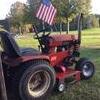
7 pointsJust finished mowing with IRV and what great seat time ! I hated to see it end. Time for a black and tan!!!
-
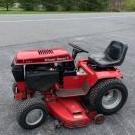
7 pointsHi folks, picked this up not to far from home this morning. Seller had mentioned it needed some carb tweaking, it would idle up, but then not idle down when ya moved the lever back, kinda raced......I thought maybe it just needed a govenor adjustment, but feared it might be an internal govenor problem. Lucky me, as it turned out, the linkage was just kinda wonky, and needed the be persuaded with a pair pliers to allow free movement without getting hung up on itself!! Idles up and down great now, runs like a kitten too!!! Came with the 42 inch deck, plow, some extra blades and pieces parts, and manuals. Fella was asking 400$ for all of it, I end up getting it for 300$. He was very nice and seemed glad it was going to someone that would appreciate it. Anywho, just Sharing.
-
7 pointsFirst the sickel bar now another mower........ wonder if she will ever go away again ? My number 5 daughter returned home a few months ago and was willing to mow but the "big" Horses intimidated her a little.... so.... after picking up yesterdays Sickel Mower I went and got a Wheel Horse cousin.... A Toro 10-32 that has a Wheel Horse Decal up front, maybe they sold em that way in 1989. Appears to be very well kept and after airing the tires, swapping a battery in, and jumping the ignition she fired right up.... Not anything like my other Wheel Horses but pretty nice little mower..... I was surprised that the turning radius was larger than my C-100..... but for 200.00 a keeper and maybe my new tenant will cut the grass !!!!!!
-
5 pointsHere is the second one.
-
4 pointsTrina n her mom spent some time dodging rain drops and moving wood this afternoon. She moved 4 loads with mumma and another 2 herself. The basement is well stocked for fall now.
-
3 pointsThis was next to my tractors yesterday at the Plymouth tractor show.
-
3 pointsBought an engine for the raider10, which was my main working tractor. Now running the c141 with a 12 horse, but the Raider10 has a better deck for the ditches. Pumped about the engine. It's a starter/generator set up. I love this modified harbor freight high position motorcycle lift. Add the wheels and perfect for jobs that require a strong back. Rated for 1100, but I keep it at 750. Lifts to 30 inches and lifts quickly compared to most others. I have had a Gold Wing on it for a rebuild, so don't put down Hft
-
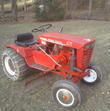
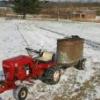
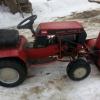
3 pointsMy second Economy tractor, brought it home so it could the first one company. Rough but it runs. 14HP-16"Wheels, tandem trans, hydraulic lift and a mower deck.
-
3 pointsLeave it in gear and start it from the front. Hop on as it's buzzin by!
-
2 pointsSince I no longer do much welding sold my Mig, I hate flux core wire and there's no way to justify paying demurrage on gas bottles and it takes a few months for the turn around to have self owned bottles filled. Found and older Lincoln AC at a yard sale that's old enough to have copper winding's, performs decent enough that I'm happy with it, now that I'm using that old RV trailer frame and axles to build into a utility trailer. I'm burning up some rod, with the welder purchase some 7014 came in the deal, now that I've used all of that up a neighbor gave me some 7024 that has an unusually thick flux coating. So I did some research and this is what I found on welding rods. 8 Questions About Stick Welding Electrodes Answered Print Article We’ve answered some frequently asked questions to help you choose the right stick electrodes for your welding application. Stick welding requires skill Whether you are a DIYer who stick welds only a few times a year or a professional welder who welds every day, one thing is certain: Stick welding requires a lot of skill. It also requires some know-how about stick electrodes (also called welding rods). Because variables such as storage techniques, electrode diameter and flux composition all contribute to stick electrode selection and performance, arming yourself with some basic knowledge can help you minimize confusion and better ensure stick welding success. 1. What are the most common stick electrodes? Hundreds, if not thousands, of stick electrodes exist, but the most popular are mild steel electrodes, which fall into the American Welding Society (AWS) classification A5.1. These include the 6010, 6011, 6012, 6013, 7014, 7024 and 7018 electrodes. 6010 electrodes deliver deep penetration and have the ability to “dig” through rust, oil, paint or dirt, making them popular among pipe welders. 2. What do AWS stick electrode classifications mean? To help identify stick electrodes, the AWS uses a standardized coding system. Codes take the form of numbers and letters printed on the side of each stick electrode, and each represents specific electrode properties. For the mild steel electrodes mentioned above, here is how the AWS system works: The letter "E" indicates an electrode. The first two digits represent the resulting weld's minimum tensile strength, measured in pounds per square inch (psi). For example, the number 70 in a E7018 electrode indicates that the electrode will produce a weld bead with a minimum tensile strength of 70,000 psi. The third digit represents the welding position(s) for which the electrode can be used. For example, 1 means the electrode can be used in all positions and 2 means it can be used on flat and horizontal fillet welds only. The fourth digit represents the coating type and the type of welding current (AC, DC or both) that can be used with the electrode. 7018 electrodes produce strong welds with high impact properties and can be used on high strength steel base metals. 3. What are the differences between 6010, 6011, 6012 and 6013 electrodes and when should they be used? 6010 electrodes can only be used with direct current (DC) power sources. They deliver deep penetration and have the ability to dig through rust, oil, paint and dirt. Many experienced pipe welders use these all-position electrodes for root welding passes on a pipe. However, 6010 electrodes feature an extremely tight arc, which can make them difficult for novice welders to use. 6011 electrodes can also be used for all-position welding using an alternating current (AC) welding power source. Like 6010 electrodes, 6011 electrodes produce a deep, penetrating arc that cuts through corroded or unclean metals. Many welders choose 6011 electrodes for maintenance and repair work when a DC power source is unavailable. 6012 electrodes work well in applications that require gap bridging between two joints. Many professional welders also choose 6012 electrodes for high-speed, high-current fillet welds in the horizontal position, but these electrodes tend to produce a shallower penetration profile and dense slag that will require additional post-weld cleaning. 6013 electrodes produce a soft arc with minimal spatter, offer moderate penetration and have an easily-removable slag. These electrodes should only be used to weld clean, new sheet metal. 4. What are the differences between 7014, 7018 and 7024 electrodes and when should they be used? 7014 electrodes produce about the same joint penetration as 6012 electrodes and are designed for use on carbon and low-alloy steels. 7014 electrodes contain a higher amount of iron powder, which increases deposition rate. They can also be used at higher amperages than 6012 electrodes. 7018 electrodes contain a thick flux with high powder content and are one of the easiest electrodes to use. These electrodes produce a smooth, quiet arc with minimal spatter and medium arc penetration. Many welders use 7018 electrodes to weld thick metals such as structural steel. 7018 electrodes also produce strong welds with high impact properties (even in cold weather) and can be used on carbon steel, high-carbon, low-alloy or high-strength steel base metals. 7024 electrodes contain a high amount of iron powder that helps increase deposition rates. Many welders use 7024 electrodes for high-speed horizontal or flat fillet welds. These electrodes perform well on steel plate that is at least 1/4-inch thick. They can also be used on metals that measure over 1/2-inch thick. 5. How do I choose a stick electrode? First, select a stick electrode that matches the base metal strength properties and composition. For example, when working on mild steel, generally any E60 or E70 electrode will work. Next, match the electrode type to your welding position and consider your available power source. Remember certain electrodes can only be used with DC or AC, while other electrodes can be used with both DC and AC. You will also want to assess the joint design and fit-up you need and select an electrode that will provide the best penetration characteristics (digging, medium or light). If you are working on a joint with tight fit-up or one that is not beveled, electrodes such as E6010 or E6011 will provide digging arcs to ensure sufficient penetration. For thin materials or joints with wide root openings, select an electrode with a light or soft arc such as an E6013. To avoid weld cracking on thick, heavy material and/or complicated joint designs, select an electrode with maximum ductility. Also consider the service condition the component will encounter and the specifications it must meet. Will it be used in a low temperature, high temperature or shock-loading environment? For these applications, a low hydrogen E7018 electrode works well. You should also consider the production efficiency. When working in the flat position, electrodes with a high iron powder content, such as such E7014 or E7024, offer higher deposition rates. For critical applications, always check the welding specification and procedures for the electrode type. 6. What function does the flux surrounding a stick electrode serve? All stick electrodes consist of a wire surrounded by a coating called flux, which serves several important purposes. It is actually the flux, or the covering, on the electrode that dictates where and how an electrode can be used. When you strike an arc, the flux burns and produces a series of complex chemical reactions. As the flux ingredients burn in the welding arc, they release shielding gas to protect the molten weld pool from atmospheric impurities. When the weld pool cools, the flux forms slag to protect the weld metal from oxidation and prevent porosity in the weld bead. Flux also contains ionizing elements that make the arc more stable (especially when welding with an AC power source), along with alloys that give the weld its ductility and tensile strength. Some electrodes use flux with a higher concentration of iron powder to help increase deposition rates, while others contain added deoxidizers that act as cleaning agents and have the ability to penetrate corroded or dirty workpieces or mill scale. 7. When should I use a high deposition stick electrode? High deposition rate electrodes can help complete a job faster, but these electrodes have limitations. The additional iron powder in these electrodes makes the weld pool much more fluid, meaning that high deposition electrodes can't be used in out-of-position applications. They also cannot be used for critical or code-required applications, such as pressure vessel or boiler fabrication, where weld beads are subject to high stresses. High deposition electrodes, however, are an excellent choice for non-critical applications, such as welding a simple liquid storage tank or two pieces of non-structural metal together. 8. What is the proper way to store and re-dry stick electrodes? A heated, low humidity environment is the best storage environment for stick electrodes. For example, many mild steel, low hydrogen 7018 electrodes need to be stored at a temperature between 250 and 300 degrees Fahrenheit. Generally, electrodes' reconditioning temperatures are higher than the storage temperature, to help eliminate excess moisture. To recondition the low hydrogen 7018 electrodes discussed above, the reconditioning environment ranges from 500 to 800 degrees for one to two hours. Some electrodes, like 6011s, only need to be stored "dry at room temperature," which is defined as humidity levels not exceeding 70 percent at a temperature between 40 and 120 degrees. For specific storage and reconditioning times and temperatures, always refer to the manufacturer's recommendations. Related Articles Factors for Selecting the Right Stick Electrode Frequently Asked Questions About Stick Welding Stick Welding for Equipment Repair: Electrodes, Equipment and Technique
-
2 pointsI'm leaning that way myself. I've got some red ones, and a set of fronts that are black and don't care to much for them. So maybe when I paint the wheels, I'll do the weights. I can always change them if I don't like it.
-
2 pointsI've been tinkering with a couple of bugs in that 877 I bought at the Big Show. I'm pretty sure they are all taken care of, now. All that's left now is to get the wheels cleaned up and painted. I wire wheeled the weights and primed them, just not sure yet what color to paint them.
-
2 pointsThis needs to be posted in the "Classified" For Sale section.
-
2 pointsYes, Glen, thats the name I remember seeing, Thanks
-
2 pointsHere is a link for the good ones. https://www.aircraftspruce.com/catalog/eppages/solidstatepump.php Randy
-
2 pointsUsing a wedge to draw two pieces together.
-
2 pointsCheck the vendors section. Glenn Petit is the man you need to talk to about those.
-
2 pointsI did a deck lift on a 42" deck on my 312-8. It works as all four tires are three inches taller then the originals. It cuts close to five inches in the top position. That.s 1 1/4" lower then the original hole. There is another hole 3/4" lower I'm not sure I have enough height under the tractor for that one, This picture will show why it works on my 312.
-
2 pointsno 1 of them is badly buckled, otherwise I would of cleaned them up... im gonna keep looking for a supplier who can get same offset and height and work with it Phil
-
2 points
-
2 pointsYou paid for a deck and snow plow and the seller threw in a free !
-
2 pointsWell besides the obvious short vs tall chute... the chute rotator is much simpler and user friendly on the tall chute version than the wire/cable rotator on the short chute also the early short chutes had adjustable steel wheels vs the adjustable flat steel skids for wear bar/cutting edge height.. as someone who has only had a tall chute single for 15 years before moving onto the 2stage from my own personal experiences that single stage tall did all types snow (light and fluffy ,wet , crusty frozen) very well from 4" to 24" depth the only thing the tall single stage can't do that the 2stage can is chew through D.O.T. plow banks without clogging/plugging the chute up... another thing is with the short chute the plume doesn't cover you (the operator) as much as with the tall chute when it's windy outside where a cab comes in handy...
-
2 pointsI was looking for a sickel bar for the Wheel Horse but finally gave up. My wife foolishly left me home alone this weekend and there suddenly appeared an ad for a vintage Jari Sickel Bar in nice condition. Hooked up the trailer, stupidly left the Cape on a Fri afternoon and zipped on down to see my new purchase, Looks like it was made by Jari Mower of Mankata Minesota and definitely a 60's 70's pre OSHA vibe but ought to do my small jobs easily.... haven't seen a Wheel Horse sickel attachment in the 200 hundred dollar range so maybe a win for a change. Changed the oil and a first pull start....that's a first !!!! Pics attached.
-
2 pointsJust a short ligh shower was occur, than it come heat again. Cool, time for Tinker. Because i’m soooooo curious, if all my Calculations until now are right, i do the first Test with real Things. few mm differences are ok, i just wanna know if things fit as i had Planed ahead or if i did bigger mistakes. Ok, i have one mistake found, the changed and ordered Hydrauliccylinder has the greasenipple on the opposite side than the first, i missed this item in my Order. Aaaaarggghh. 🙄 Next issue i see yesterday in the Nightworker Action, the 25mm drillbit was extremly soft, it seems it is not hardened, in that case unusable, I contact the Dealer and drill instead 20mm for now. Maybe i work with standoff’s we will see. Than the big moment reached, (Drum roll) Tadaaaaa. 😂 boah looks that Cool. And it Fits, even with missed Greasenippels (gladly enough space planed) 😎 I must Lift the arm to Grease, but i can Deal with, so the consequences are low. Then my urgendst Challenge, did i reached the 2,30? (Don‘t look at my fingernails, the chewed..) This was a 3Meter rod (thanks by Mercedes for that Giveaway) 👍👍 The Mark is at 2,35m - chacka. Buddy‘s i cannot bring in Words how glad i am, to Solve that. it‘s real high, so the Rollover Protector is definiteley a must. i‘m also real Proud of the changed Shape, because it will give a pretty Cool Housing if all is finished. The „Church roof“ will be changed later into a cabin, this idea was in background. a short impression from Driver Seat.
-
2 pointsYummy
-
2 pointsI’m sure hand drills and a tap handle would have been just fine, but this mag drill was offered for the project. I can see one of these on the shelf some day!
-
1 pointGreetings all! my name is Earl and I am a new member from new york- I grew up operating a 1966 606 wheel horse mowing the lawn and plowing snow. I recently purchased a 1967 657 wheel horse tractor with a 36 inch rear discharge deck. It is basically the same machine from my childhood- The machine is in great condition having been garage kept and maintained all its life. It had been sitting for many years so it took some work to get it back to running condition but I finally had the satisfaction of cutting my grass with it just yesterday. A total trip down memory lane for sure! I am looking forward to interacting with other members here and seeing pics and hearing the tales from other proud wheelhouse owners like myself. Will attempt to post some pics !
-
1 pointHi, have got a trailer that needs new wheels... trailer has had new suspension units fitted so want to leave them alone... wheels are 13"x6" with 205 wide tires (think someone has fitted wider tires) wheels are negative offset =ET-015 and have 10mm spacer so basically this equates to a wheel with ET-025, follow ? problem is they are rubbing against the trailer body hence the use of a spacer...but ideally would need a wider spacer , so with the need to move wheel out even more to avoid tire rubbing (ideally moving wheel out another 15mm) I would now need a wheel of ET-040 (not ideal for a trailer designed for carrying weight) as most wheels I see for trailers are around zero or positive offset question... if I went for a wheel size of around 5" with a narrower tire of 165-175mm would this enable me to reduce the negative offset on the wheel ? Im having trouble over here getting a wheel with this kind of negative offset any help or/and links to company supplying wheels that would suit would be great... my brain is mush after 2days of this !! Phil
-
1 pointThe solid one or the "W" shape one? If the solid one yes it actually increases the velocity the snow exits ie throws the snow further away.
-
1 pointBlue and Gray On August 16, 17 & 18 2019, the Blue and Gray will be invading Trumbull County. No, it's not the Civil War again. Those are the colors of Ford tractors, the featured tractor of the 25thannual tractor show of the Antique Tractor Club of Trumbull County. The show will be held at Club's show grounds located at 1653 Ridge Road, Vienna, Ohio 44473. In 1907, Henry Ford produced his first or second experimental tractor. It was powered by a 1905 Model B engine and was called the automotive plow. This led to the production of the first mass produced tractor, the Fordson, in 1917. It was first exported to England to counteract the effect of an enemy blockade of food during World War 1, then introduced to American farmers. The Ford NAA tractor, often called the Jubilee, with the Golden Jubilee logo, was introduced in 1953 to mark the 50 year anniversary of the Ford Company. In 1993 the Ford tractor division was sold to Fiat. Agri. For some good old fashioned country fun, come out to enjoy the show. There's something for everyone. There will be vendors with handcrafted items as well as direct sales representatives from various companies. For the kids there's a bounce house, face painting, crafts and games. There will be a different basket auction each day with a chance to win some great items including some donated by our vendors. Drawing will be held each day at 4 PM. Winners need not be present. An added attraction at this year's show will be a display of equipment from the Youngstown Air Reserve Station, Vienna, Ohio. It is the home of the 910thAirlift Wing, an Air Force Reserve Command Unit. An individual will also have a jet engine on display. At announced times this will be started up with a roar. Friday, tractors will be arriving all day. At 2 PM watch the members pull their garden tractors just for fun. Stay for a spaghetti dinner starting at 5 PM till sold out. Donation $8.00 Saturday's festivities officially start out with a pancake breakfast from 8:00 AM till 10:00 AM or till sold out. The opening ceremonies will take place at 9:00 with a Military Color Guard, National Anthem by the United States Air Force and a Military flyover. At 10:00 AM, the members will once again pull their garden tractors. We can't leave the kids out of the fun so from 12 to 1 PM there will be a kiddie tractor pull for ages 3 to 12. The “Old Guys” big tractor pull will be from 1 to 3 PM. At 3:30, the Boy Scouts will be holding a Flag Retirement Ceremony. If you have a United States Flag that is no longer in condition to be flown, please bring it to the show so that it may be disposed of properly. The basket drawing happens at 4 PM. There will be a delicious Swiss steak dinner starting at 5 PM till sold out. Donation $8.00. From 6 PM to 8 PM, sit back, relax and enjoy the singing of Trumbull County's own Denise Starr. On Sunday morning once again there will be a pancake breakfast from 8 to 10 or till sold out. Please join us at 9:00 AM for an outdoor church service with Ed Agler. Enjoy the singing of the Saving Grace Group. At 11 AM, make your way to the bleachers in front of the pulling track for the Parade of Power. This activity gives owners the chance to show off their equipment. At noon till about 3 PM the exciting Ground Pounders Unlimited LLC garden tractor pulling club will rev their engines and make the dust fly as they attempt to pull the sled down the track. Things will wind down at 4 PM with the basket auction drawing and the 50/50 raffle drawing. If you happen to be hungry during the day we have you covered. Visit the Club's concession trailer where you'll find the Club's famous bean soup and homemade cobblers along with other goodies. Or visit Wendy's trailer for a hot sausage or Philly cheesesteak sandwich. If you're looking for a sweet snack to nibble, the NBW (Nothing But Waffles) truck will be here with their made from scratch waffles and funnel cakes and their yummy smoothies. While at the show be sure to visit our Memories of Yesteryear building located in the NW area of the grounds. Here you'll see an exhibit of donated and loaned items that were used by our ancestors either in the field, work shop or in the home. At the South end of the grounds watch a blacksmith as he creates objects by hot and cold forging and hammering on an anvil. Also in this area are a Post Office building from East Orwell, Ohio and a scale house from Lockwood, Ohio. The mail sorting cubbies in the Post Office are from the West Farmington, Ohio Post Office. If you are interested in joining the Club, memberships will be available at the show. Individual membership is $12.00, family memberships $14.00. For more info contact Terry (330) 442-2430 Vendor info Linda (440) 693-4687
-
1 pointSorry about that... It is in South Carolina. I just thought someone might be interested. I have no connection. Danny
-
1 pointIf by ignition box you mean the points cover they very possibly could be your issue. Take the cover off gap them to .020 and clean them with a metal points file (or you r wife's metal nail file. No emory boards. Did you test the coils that you think failed??
-
1 pointTrucks with style.
-
1 pointhttps://www.wheelhorseforum.com/files/category/18-mower-decks-reel/
-
1 pointDude, you’re buying up Michigan’s herd left and right! Good job!
-
1 pointLooks like a keeper to me.Of course at 265 lbs and 6 feet tall,Don't know what I'd look like riding on it.Have fun with your new toy.
-
1 pointNice Steve ...smoked salmon is the best. Nothing beats a day fishing on the big water . My neighbor has been fishing for walleye in lake Erie . Caught a lunker yesterday along with a cooler full of nice keepers. Let’s hope that they can keep the asian carp from invading the waters .
-
1 pointI need to not internet while I'm hungry.
-
1 pointDid somebody say poutine?
-
1 pointThanks all for the kind welcome and excellent advice - have checked the manuals etc. and yes - it's a strip down - annoying as if I'm going that far it'd be dumb not to weld the deck at the same time..................... seems I'm missing a few brackets, bolts etc. but they should be easy. In the meantime I'm building a trailer - using a lovely chassis that I suspect is ex fire service - photos to follow................. Thanks again, Ali
-
1 pointI used it once more for corner holes on this pocket. I’ll end up building a power supply channel out of angle iron and this is the access box. These Annular Cutters are pretty cool too! I would call them super tough hole saws!
-
1 pointwould this help....
-
1 pointI fave a few Fisher truck snow plow pumps I believe. They are a pump and reservoir in one and are driven off a V-belt. If it will work on my 8’ plow, I don’t see why it wouldn’t work on a garden tractor...
-
1 pointHere is a video of a 2” cut. I realize I should probably have more PPE and also noticed that I seem to chew when I’m thinking! There’s not much in that noggin, especially in my mouth! Also, I’m testing my depth to make my bend points. I cannot believe how clean this cuts, I could probably get into the key cutting business with it!
-
1 pointFilling out membership applications to join the Headless Horsemen .... Long live the HH!
-
1 pointMan, that was a tough lesson. But I'm learning slowly - don't take actions that will be hard to reverse. Take my time and think it through.
-
1 pointI've never heard it put that way but I love it!! You're right Jim. If the flush is clean and the transmission feels fine don't mess with it. If nothing else, why risk breaking one of the hooby-doobys
-
1 pointIt outta look pretty good. It’s brand spankin new Yep, 1156’ers. Bought some of the LEDs for our real work tractor. Used them maybe once, the sockets never wanted to stay connected to the lens assembly. One came loose one day while mowing and blew the fuse (that how I learned the location of the fuse). Did it once more, clipped the wires. Bob’s New Rule: If it’s too dark to do yard work.....It’s Miller Time!















This leaderboard is set to New York/GMT-04:00